
Bluefield (CLub Blvd Community)
2415 Glenbrook Drive
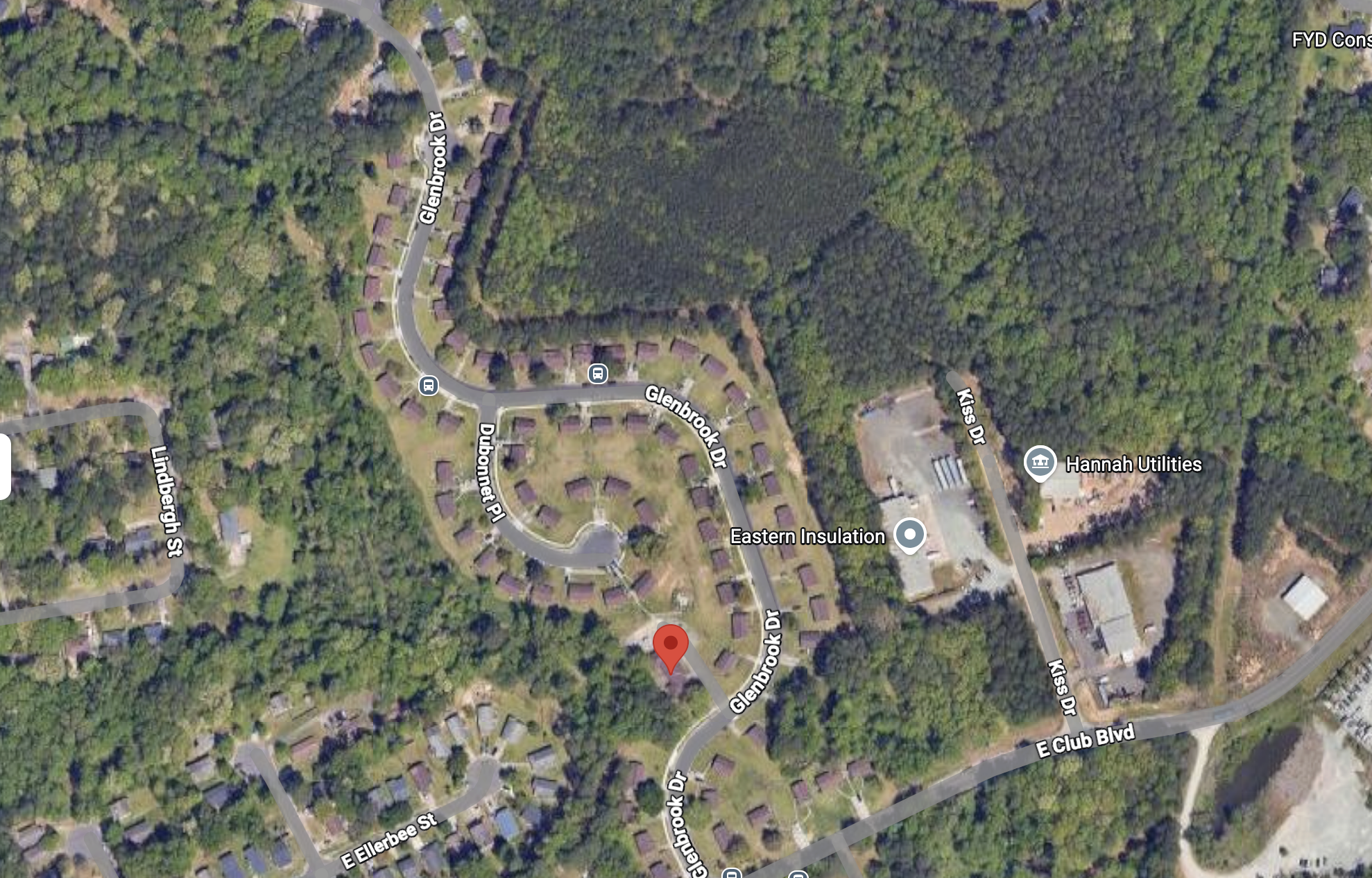
Club Boulevard Community, more commonly known as Bluefield, is a housing complex built by the Durham Housing Authority. It was completed in 1969 and is comprised of 77 single family detached houses.
Bluefield is located in the northeast section of Durham, in the Bragtown neighborhood. Before Durham was Durham and before this area was annexed by the City of Durham in the late 1950s, this region included one of the largest plantations in North Carolina now known as Staggville. The Bennehan and Cameron families enslaved hundreds of Africans and African-Americans there from 1771 to 1865.
After emancipation, freed families began to leave Staggville, and many people from Staggville settled in Durham, including in the Bragtown community in 1869-1870. The story of Bragtown shared by neighborhood elders is of an unincorporated community that had its own mayor; a self-reliant Black community that created its own library when a Fence Road neighbor dedicated their home for a community collection; a free community of families that left the Cameron plantation lands, walking the rail road tracks to a fresh start during Reconstruction.
The connection between Staggville and Bragtown continued for many decades. Families in Bragtown often had relatives living out at Staggville. Farming families who stayed at Staggville came into Braggtown to purchase goods and supplies. The Cameron Grove Baptist Church, originally started at Staggville and moved to Bragtown, was a powerful connection between the two communities. In the 1940s, as many sharecroppers left Staggville, they moved to Bragtown, where family, church, and community tied them together. While Staggville is not part of the history of all Braggtown residents, the stories of Staggville families can represent the resilience, strength, and community bonds of all Bragtown families.
Another important location is the area surrounding the rail line (a little east of Bluefield), which became a primary route from Stagville to the newly-free Black community; and the historic business district of Bragtown anchored at Roxboro Road and Club Boulevard. The rail trail is now part of the upcoming Durham-to-Roxboro Rail Trail Plan, which would make the existing 18-mile inactive rail corridor within Durham County into a multi-use trail. The planning study seeks to honor the area’s rich history while designing a distinctive rail trail experience that celebrates and protects the unique environment, heritage, and character of the corridor. They propose connectors from the trail to the Lakeview school, Red Maple Park (further up along Glenbrook Dr), and the Bragtown Branch Library.
The community is an extremely active and tight one, and can be seen in the work of the Braggtown Community Association which is led by Ms. Vannessa Mason Evans and Ms. Constance Wright, among others.
Watershed
Bluefield is in the Ellerbe Creek Watershed. This watershed has the highest population density of Durham’s watersheds. Water from Ellerbe Creek flows into Falls Lake, then it follows the Neuse River to the Albemarle-Pamlico Sound before emptying into the ocean.
Water quality concerns keep Ellerbe Creek from its intended uses by people and wildlife. The State has added the creek to a list of impaired water bodies, also known as the 303(d) list. This means the city will need to take steps to find and reduce sources of pollution in the creek.
Sources and more information:
https://www.durhamhousingauthority.org/locations/detail/3100
https://sites.google.com/view/rootsofbraggtown/home
https://durham2roxborotrailplan.com/
https://www.durhamcommunityengagement.org/our_community_stories_braggtown_recording
https://dataworks-nc.org/2019/claiming-history-space-and-the-future-this-is-braggtown/